---
title: "Field Notes: AI and Localization Innovation (Video Library)"
description: Explore the latest insights in localization, AI innovations, and emerging challenges through expert conversations that enhance understanding and drive actionable solutions in the industry.
image: https://info.argosmultilingual.com/hubfs/FieldNotes%20-%20Landing%20Page%20Header.png
---
[Skip to the main content.](https://info.argosmultilingual.com/field-notes-video-library#main-content)
[](https://www.argosmultilingual.com/)
[](https://www.argosmultilingual.com/)
- [Solutions](https://www.argosmultilingual.com/)
- [About Us](https://www.argosmultilingual.com/about-us)
- [Resources](https://www.argosmultilingual.com/resources)
- [Blog](https://www.argosmultilingual.com/blog)
- [Contact Us](https://www.argosmultilingual.com/contact-us)
Toggle Menu
Toggle Menu
- [Solutions](https://www.argosmultilingual.com/)
- [About Us](https://www.argosmultilingual.com/about-us)
- [Resources](https://www.argosmultilingual.com/resources)
- [Blog](https://www.argosmultilingual.com/blog)
- [Contact Us](https://www.argosmultilingual.com/contact-us)
## **Field Notes**
###### with Stephanie Harris-Yee
#### Real talk on AI and localization, in 15 minutes or less.
Hello! I'm Stephanie, and welcome to Field Notes, a series where I sit down with industry pros of the localization world to dig into the topics that are actually showing up in our day-to-day. Some episodes are about big shifts like AI and what it's doing to our workflows. Others are about the smaller, stickier stuff (pricing quality, managing SMEs, or figuring out what to do when a rogue team starts translating without you). The goal isn't to hand you a perfect playbook but to share what we're seeing out in the field, swap notes with people who know their stuff, and hopefully give you a few useful things to take back to your own work. So grab a coffee and settle in for sharp 15-min sessions on the latest thoughts and experiments in the industry.
---
# Episodes
---
[](https://info.argosmultilingual.com/field-notes-video-library#modal_1_dnd_area-module-3)
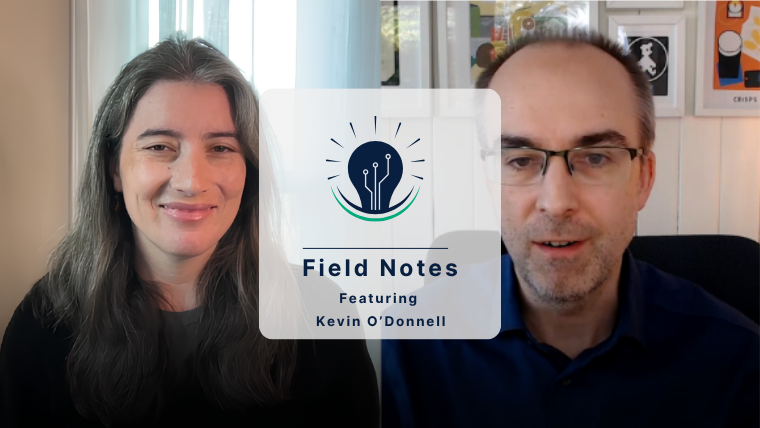
##### **Mapping Influence For Localization Leaders**
We’re expected to deliver a high-quality multilingual experience across acquisition, conversion, onboarding, retention, and expansion, yet the real levers often sit with different leaders across marketing, sales, product, and customer success. Kevin O’Donnell, strategic advisor at Global 10X, gets concrete about what “influence” actually looks like inside a cross-functional, matrixed organization.
[](https://info.argosmultilingual.com/field-notes-video-library#modal_2_dnd_area-module-3)
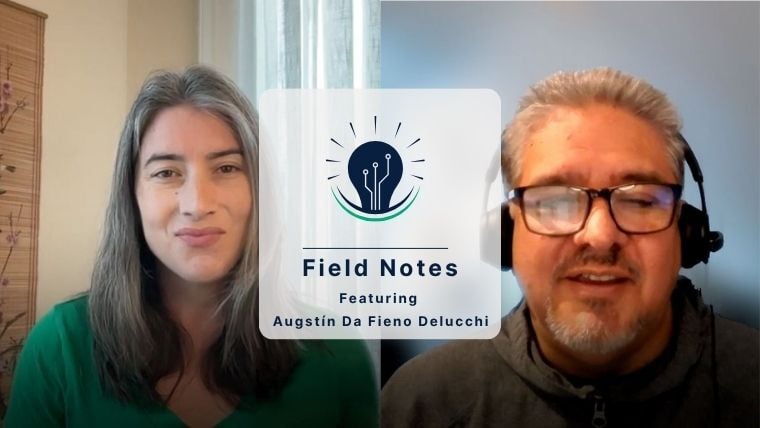
##### **Context as a System**
We’ve all gotten better at generation, better models, better prompting, better fine-tuning. Agustin argues that progress is real, but it hits a ceiling when the surrounding architecture has no memory of what “good performance” looks like across markets. We explore how to move beyond linguistic correctness and brand compliance as the finish line, and start aiming for resonance: the words, framing, and emotional register that actually drive action for a specific audience.
[](https://info.argosmultilingual.com/field-notes-video-library#modal_3_dnd_area-module-3)
##### **Token Pricing and the Effects on Localization**
A confusing message is circulating about the economics of AI. One camp insists that hiring back a junior engineer is now cheaper than using AI to build things; another insists it has never been cheaper to dig in and build apps yourself, no external teams required. Both claims can be true at once. Moore’s law and economies of scale are clearly pushing unit prices down. But the unit price of a token is not the same as the cost of an outcome, and for localization that distinction is where most of the confusion lives.
[](https://info.argosmultilingual.com/field-notes-video-library#modal_4_dnd_area-module-3)
##### **How to Negotiate With Your TMS**
Your translation management system might not be failing, but it can still be an imperfect fit. We unpack why many client-side localization professionals feel stuck right now: TMS platforms that start showing product gaps once you add more content types, more stakeholders, tighter release cycles, and more languages. We get concrete about what to do next without pretending there’s a perfect answer.
[](https://info.argosmultilingual.com/field-notes-video-library#modal_5_dnd_area-module-3)
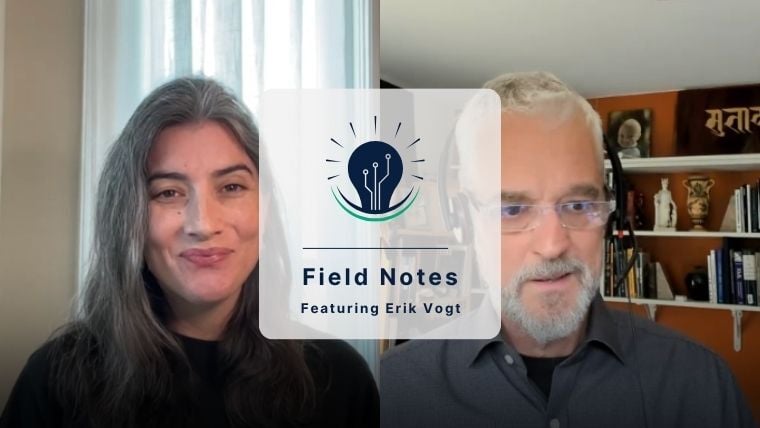
##### **Shadow Localization from an Organizational Perspective with Erik**
We dig into the forces behind “shadow localization,” from executive pressure for velocity to the growing ease of plugging AI translation into any workflow. The risks are not just technical fragmentation or duplicated effort.
[](https://info.argosmultilingual.com/field-notes-video-library#modal_6_dnd_area-module-3)
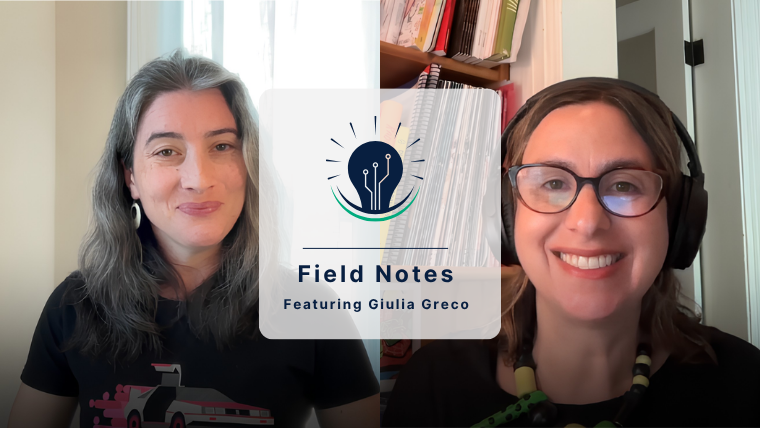
##### **Shadow Localization from a Localization Manager's Perspective with Giulia**
Someone on your team ships a translated page overnight, looks like a hero, and nobody filed a localization request. Then you stumble on the copy later and think, “Did we do this?” That moment has a name: shadow localization.
[](https://info.argosmultilingual.com/field-notes-video-library#modal_7_dnd_area-module-3)
##### **Economies of Scale vs Assurance**
AI has made translation dramatically cheaper, yet a lot of localization leaders still feel like budgets are tightening and quality pressure is rising at the same time. We dig into why that paradox is real and how it shows up inside modern localization programs.
[](https://info.argosmultilingual.com/field-notes-video-library#modal_8_dnd_area-module-3)
##### **The Governance Problem**
AI translation has never looked better on the surface, yet plenty of teams still can’t make it work reliably in production. We dig into the uncomfortable reason: large language models are probabilistic systems, so the failure modes shift from obvious “bad machine translation” to believable, fluent mistakes that can quietly change meaning, introduce the wrong product definition, or slip in biased or hallucinated details.
[](https://info.argosmultilingual.com/field-notes-video-library#modal_9_dnd_area-module-3)
##### **Why SMEs Are The Real Bottleneck**
Translation is getting faster every month, yet localization risk keeps rising. That’s not a paradox, it’s a signal that the bottleneck has moved. Stephanie from Argos sits down with Erik, an independent advisor at Vogt Strategy, to name the real constraint most enterprise teams are feeling: subject matter expert feedback loops that can’t keep up with AI-driven volume.
[](https://info.argosmultilingual.com/field-notes-video-library#modal_10_dnd_area-module-3)
##### **How to Price Localization Quality**
“Quality” in translation sounds like a simple promise until you ask one uncomfortable question: what happens if it’s wrong? Stephanie and Erik unpack why so many localization pricing conversations get stuck on a single, vague standard, and how that confusion leads teams to either overbuy heavy workflows or quietly push risk onto vendors without paying for it.
[](https://info.argosmultilingual.com/field-notes-video-library#modal_11_dnd_area-module-3)
##### **Metadata**
Metadata sounds like the boring part of localization until you realize it can be the difference between a scalable operation and a constant fire drill. We get specific about what’s at stake when a major share of a multi-billion-dollar industry goes to coordination, project management overhead, and transactional friction rather than value creation.
[](https://info.argosmultilingual.com/field-notes-video-library#modal_12_dnd_area-module-3)
##### **Solutions Design**
Localization is changing so fast that our old labels might not survive it. Stephanie sits down with Erik Vogt to unpack “solutions design,” the strategic discipline of turning a real business problem into a technology-supported solution that is both executable and commercially viable.
[](https://info.argosmultilingual.com/field-notes-video-library#modal_13_dnd_area-module-3)
##### **Connectors**
“Just connect the systems” is the phrase that launches a thousand painful integration projects. We sit down to get honest about why connectors in localization and content operations are rarely plug and play, even when a vendor says they have one.
[](https://info.argosmultilingual.com/field-notes-video-library#modal_14_dnd_area-module-3)
##### **AI in Marketing**
We tackle the big question global teams are wrestling with: if you can originate content directly in any language, does localization still matter? Our answer is yes, but the job changes.
[](https://info.argosmultilingual.com/field-notes-video-library#modal_15_dnd_area-module-3)
##### **Ai-Powered Language Quality Assurance**
AI LQA sounds like the shortcut every localization team wants, but the real story is more nuanced and a lot more useful. We sit down with Erik Vogt to define AI-driven linguistic quality assurance and quality estimation in plain terms, then follow the practical question that matters: how do you use AI to review more content without blowing up cost, time, or trust?
[](https://info.argosmultilingual.com/field-notes-video-library#modal_16_dnd_area-module-3)
##### **Are Fuzzy Matches Dead?**
Fuzzy matches have been treated like a law of physics in localization: higher similarity means lower effort, so the discount grid must be fair. But when we look closely, that assumption starts to wobble.
[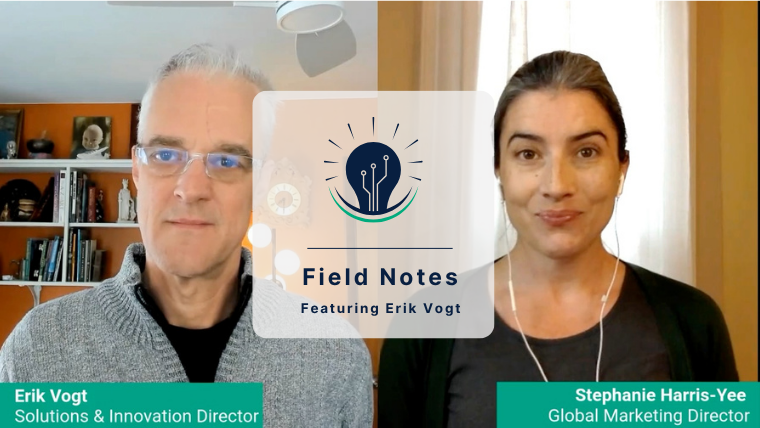](https://info.argosmultilingual.com/field-notes-video-library#modal_17_dnd_area-module-3)
##### **From Idea to AI**
A CEO says “add AI,” a team nods, and suddenly everyone is shopping for tools instead of solving a problem. We dig into why that move derails so many AI initiatives and how to convert a fuzzy mandate into a project you can scope, staff, and measure without burning months on ambiguity.
[](https://www.linkedin.com/in/sharrisyee/)
Stay up-to-date with the latest Field Notes
Who We Are
Who We Are
- [About Us](https://www.argosmultilingual.com/about-us)
- [Inclusion, Diversity and Equity](https://www.argosmultilingual.com/inclusion-diversity-and-equality-at-argos)
- [Leadership Team](https://www.argosmultilingual.com/leadership-team)
- [ISO Certified Translation Services](https://www.argosmultilingual.com/iso-certified-translation-services)
- [Our Partners](https://www.argosmultilingual.com/our-partners)
- [Sustainability](https://www.argosmultilingual.com/sustainability)
What We Do
What We Do
- [Translation and Localization Services](https://www.argosmultilingual.com/translation-and-localization-services)
- [Content Creation and Optimization Services](https://www.argosmultilingual.com/content-creation-and-optimization-services)
- [Multimedia Services](https://www.argosmultilingual.com/multimedia-services)
- [Language Quality Evaluation](https://www.argosmultilingual.com/language-quality-evaluation)
- [Content & Linguistic Assets Management](https://www.argosmultilingual.com/content-and-linguistic-assets-management)
- [Language Ownership Program](https://www.argosmultilingual.com/language-ownership-program)
- [AI/LLM Data Solutions](https://ai.argosmultilingual.com/)
Who We Work For
Who We Work For
- [Life Sciences & Medical](https://www.argosmultilingual.com/life-sciences-medical-healthcare-translation-services)
- [Technical & Manufacturing](https://www.argosmultilingual.com/technical-and-manufacturing-translation-services)
- [Human Resources](https://www.argosmultilingual.com/hr-and-corporate-communications-translations)
- [Technology](https://www.argosmultilingual.com/technology-translation-services)
- [Financial](https://www.argosmultilingual.com/financial-translation-services)
[](https://www.argosmultilingual.com/)
- [Privacy Policy](https://www.argosmultilingual.com/privacy-policy)
© 2026 Argos Multilingual
[X](https://twitter.com/ArgosMultiling)[Linkedin](https://www.linkedin.com/company/argos-multilingual)[YouTube](https://www.youtube.com/c/ArgosMultilingual)
Return to top
```json
{
"@context" : "https://schema.org",
"@type" : "VideoObject",
"caption" : {
"@type" : "MediaObject",
"contentUrl" : "https://info.argosmultilingual.com/media-transcripts/245433520318/en.vtt",
"inLanguage" : "en",
"name" : "en Captions"
},
"contentUrl" : "https://stream.mux.com/5wb171HB7HJ9mR1htjet00rEJy017aiAIRqtw011pLxtC8/capped-1080p.mp4",
"dateModified" : "2025-06-24T13:23:28.161Z",
"duration" : "PT38S",
"height" : 720,
"name" : "Field Notes_ Intro",
"thumbnailUrl" : "https://26728782.fs1.hubspotusercontent-eu1.net/hubfs/26728782/Field%20notes/Field%20Notes_%20Intro.mp4/medium.jpg",
"uploadDate" : "2025-06-16T15:23:29.095Z",
"width" : 1280
}
```
```json
{
"@context" : "https://schema.org",
"@type" : "VideoObject",
"caption" : {
"@type" : "MediaObject",
"contentUrl" : "https://info.argosmultilingual.com/media-transcripts/461722606827/en.vtt",
"inLanguage" : "en",
"name" : "en Captions"
},
"contentUrl" : "https://26728782.fs1.hubspotusercontent-eu1.net/hubfs/26728782/video_assets/461722606827/inherited/web_optimized.mp4",
"dateModified" : "2026-08-28T21:24:09.756Z",
"duration" : "PT8M9.631S",
"height" : 1080,
"name" : "Field Notes Kevin ODonnell",
"thumbnailUrl" : "https://26728782.fs1.hubspotusercontent-eu1.net/hubfs/26728782/Field%20Notes%20%20Kevin%20ODonnell.mp4/medium.jpg",
"uploadDate" : "2026-08-28T21:23:35.329Z",
"width" : 1920
}
```
```json
{
"@context" : "https://schema.org",
"@type" : "VideoObject",
"caption" : {
"@type" : "MediaObject",
"contentUrl" : "https://info.argosmultilingual.com/media-transcripts/431446420709/en.vtt",
"inLanguage" : "en",
"name" : "en Captions"
},
"contentUrl" : "https://26728782.fs1.hubspotusercontent-eu1.net/hubfs/26728782/video_assets/431446420709/inherited/web_optimized.mp4",
"dateModified" : "2026-07-09T14:45:18.923Z",
"duration" : "PT13M52S",
"height" : 720,
"name" : "Field Notes_ Context as a System, Agustin",
"thumbnailUrl" : "https://26728782.fs1.hubspotusercontent-eu1.net/hubfs/26728782/Field%20notes/Field%20Notes_%20Context%20as%20a%20System%2c%20Agustin.mp4/medium.jpg",
"uploadDate" : "2026-07-04T13:55:40.678Z",
"width" : 1280
}
```
```json
{
"@context" : "https://schema.org",
"@type" : "VideoObject",
"caption" : {
"@type" : "MediaObject",
"contentUrl" : "https://info.argosmultilingual.com/media-transcripts/423758851284/en.vtt",
"inLanguage" : "en",
"name" : "en Captions"
},
"contentUrl" : "https://26728782.fs1.hubspotusercontent-eu1.net/hubfs/26728782/video_assets/423758851284/inherited/web_optimized.mp4",
"dateModified" : "2026-06-29T12:55:03.286Z",
"duration" : "PT14M12S",
"height" : 720,
"name" : "Field Notes_ Token pricing and the effects on localization",
"thumbnailUrl" : "https://26728782.fs1.hubspotusercontent-eu1.net/hubfs/26728782/Field%20notes/Field%20Notes_%20Token%20pricing%20and%20the%20effects%20on%20localization.mp4/medium.jpg",
"uploadDate" : "2026-06-19T19:23:58.603Z",
"width" : 1280
}
```
```json
{
"@context" : "https://schema.org",
"@type" : "VideoObject",
"caption" : {
"@type" : "MediaObject",
"contentUrl" : "https://info.argosmultilingual.com/media-transcripts/415449463023/en.vtt",
"inLanguage" : "en",
"name" : "en Captions"
},
"contentUrl" : "https://26728782.fs1.hubspotusercontent-eu1.net/hubfs/26728782/video_assets/415449463023/inherited/web_optimized.mp4",
"dateModified" : "2026-06-04T15:18:47.772Z",
"duration" : "PT10M57S",
"height" : 720,
"name" : "Field Notes_ How to negotiate with your TMS",
"thumbnailUrl" : "https://26728782.fs1.hubspotusercontent-eu1.net/hubfs/26728782/Field%20notes/Field%20Notes_%20How%20to%20negotiate%20with%20your%20TMS.mp4/medium.jpg",
"uploadDate" : "2026-06-03T22:42:59.380Z",
"width" : 1280
}
```
```json
{
"@context" : "https://schema.org",
"@type" : "VideoObject",
"caption" : {
"@type" : "MediaObject",
"contentUrl" : "https://info.argosmultilingual.com/media-transcripts/408854230227/en.vtt",
"inLanguage" : "en",
"name" : "en Captions"
},
"contentUrl" : "https://26728782.fs1.hubspotusercontent-eu1.net/hubfs/26728782/video_assets/408854230227/inherited/web_optimized.mp4",
"dateModified" : "2026-05-21T19:19:23.341Z",
"duration" : "PT10M45.5S",
"height" : 720,
"name" : "Field Notes Shadow Localization with Erik",
"thumbnailUrl" : "https://26728782.fs1.hubspotusercontent-eu1.net/hubfs/26728782/Field%20notes/Field%20Notes%20Shadow%20Localization%20with%20Erik.mp4/medium.jpg",
"uploadDate" : "2026-05-21T11:13:58.798Z",
"width" : 1280
}
```
```json
{
"@context" : "https://schema.org",
"@type" : "VideoObject",
"caption" : {
"@type" : "MediaObject",
"contentUrl" : "https://info.argosmultilingual.com/media-transcripts/404025635033/en.vtt",
"inLanguage" : "en",
"name" : "en Captions"
},
"contentUrl" : "https://26728782.fs1.hubspotusercontent-eu1.net/hubfs/26728782/video_assets/404025635033/inherited/web_optimized.mp4",
"dateModified" : "2026-05-15T20:36:33.743Z",
"duration" : "PT16M11.221S",
"height" : 720,
"name" : "Shadow Localization",
"thumbnailUrl" : "https://26728782.fs1.hubspotusercontent-eu1.net/hubfs/26728782/Field%20notes/Field%20Notes%20-%20Shadow%20Localization.mp4/medium.jpg",
"uploadDate" : "2026-05-12T16:46:09.064Z",
"width" : 1280
}
```
```json
{
"@context" : "https://schema.org",
"@type" : "VideoObject",
"caption" : {
"@type" : "MediaObject",
"contentUrl" : "https://info.argosmultilingual.com/media-transcripts/392301408451/en.vtt",
"inLanguage" : "en",
"name" : "en Captions"
},
"contentUrl" : "https://26728782.fs1.hubspotusercontent-eu1.net/hubfs/26728782/video_assets/392301408451/inherited/web_optimized.mp4",
"dateModified" : "2026-04-28T07:54:42Z",
"duration" : "PT12M18S",
"height" : 720,
"name" : "Field Notes - Economies of Scale vs Assurance",
"thumbnailUrl" : "https://26728782.fs1.hubspotusercontent-eu1.net/hubfs/26728782/Field%20notes/Field%20Notes%20-%20Economies%20of%20Scale%20vs%20Assurance.mp4/medium.jpg",
"uploadDate" : "2026-04-15T14:11:49.460Z",
"width" : 1280
}
```
```json
{
"@context" : "https://schema.org",
"@type" : "VideoObject",
"caption" : {
"@type" : "MediaObject",
"contentUrl" : "https://info.argosmultilingual.com/media-transcripts/379862611137/en.vtt",
"inLanguage" : "en",
"name" : "en Captions"
},
"contentUrl" : "https://26728782.fs1.hubspotusercontent-eu1.net/hubfs/26728782/video_assets/379862611137/inherited/web_optimized.mp4",
"dateModified" : "2026-03-30T16:33:42.313Z",
"duration" : "PT11M57S",
"height" : 720,
"name" : "Field Notes_ The Governance Problem",
"thumbnailUrl" : "https://26728782.fs1.hubspotusercontent-eu1.net/hubfs/26728782/Field%20notes/Field%20Notes_%20The%20Governance%20Problem.mp4/medium.jpg",
"uploadDate" : "2026-03-17T10:10:15.278Z",
"width" : 1280
}
```
```json
{
"@context" : "https://schema.org",
"@type" : "VideoObject",
"caption" : {
"@type" : "MediaObject",
"contentUrl" : "https://info.argosmultilingual.com/media-transcripts/368607050997/en.vtt",
"inLanguage" : "en",
"name" : "en Captions"
},
"contentUrl" : "https://26728782.fs1.hubspotusercontent-eu1.net/hubfs/26728782/video_assets/368607050997/inherited/web_optimized.mp4",
"dateModified" : "2026-02-26T11:45:13.952Z",
"duration" : "PT14M5S",
"height" : 720,
"name" : "Field Notes_ SME Roadblock",
"thumbnailUrl" : "https://26728782.fs1.hubspotusercontent-eu1.net/hubfs/26728782/Field%20notes/Field%20Notes_%20SME%20Roadblock.mp4/medium.jpg",
"uploadDate" : "2026-02-24T12:40:57.963Z",
"width" : 1280
}
```
```json
{
"@context" : "https://schema.org",
"@type" : "VideoObject",
"caption" : {
"@type" : "MediaObject",
"contentUrl" : "https://info.argosmultilingual.com/media-transcripts/353285474506/en.vtt",
"inLanguage" : "en",
"name" : "en Captions"
},
"contentUrl" : "https://26728782.fs1.hubspotusercontent-eu1.net/hubfs/26728782/video_assets/353285474506/inherited/web_optimized.mp4",
"dateModified" : "2026-01-27T14:59:40.698Z",
"duration" : "PT13M54S",
"height" : 720,
"name" : "Field Notes - The real price of localization quality",
"thumbnailUrl" : "https://26728782.fs1.hubspotusercontent-eu1.net/hubfs/26728782/Field%20notes/Field%20Notes%20-%20The%20real%20price%20of%20localization%20quality.mp4/medium.jpg",
"uploadDate" : "2026-01-27T13:59:27.941Z",
"width" : 1280
}
```
```json
{
"@context" : "https://schema.org",
"@type" : "VideoObject",
"caption" : {
"@type" : "MediaObject",
"contentUrl" : "https://info.argosmultilingual.com/media-transcripts/324017885376/en.vtt",
"inLanguage" : "en",
"name" : "en Captions"
},
"contentUrl" : "https://26728782.fs1.hubspotusercontent-eu1.net/hubfs/26728782/Field%20notes/Field%20Notes_%20Metadata.mp4",
"dateModified" : "2025-12-17T20:10:57.002Z",
"duration" : "PT14M57S",
"height" : 1080,
"name" : "Field Notes_ Metadata",
"thumbnailUrl" : "https://26728782.fs1.hubspotusercontent-eu1.net/hubfs/26728782/Field%20notes/Field%20Notes_%20Metadata.mp4/medium.jpg",
"uploadDate" : "2025-12-15T14:55:17.303Z",
"width" : 1920
}
```
```json
{
"@context" : "https://schema.org",
"@type" : "VideoObject",
"caption" : {
"@type" : "MediaObject",
"contentUrl" : "https://info.argosmultilingual.com/media-transcripts/300019116259/en.vtt",
"inLanguage" : "en",
"name" : "en Captions"
},
"contentUrl" : "https://26728782.fs1.hubspotusercontent-eu1.net/hubfs/26728782/Field%20notes/Solutions%20Design_%20Field%20Notes.mp4",
"dateModified" : "2025-11-17T23:50:28.296Z",
"duration" : "PT13M19S",
"height" : 720,
"name" : "Solutions Design_ Field Notes",
"thumbnailUrl" : "https://26728782.fs1.hubspotusercontent-eu1.net/hubfs/26728782/Field%20notes/Solutions%20Design_%20Field%20Notes.mp4/medium.jpg",
"uploadDate" : "2025-11-13T10:21:11.688Z",
"width" : 1280
}
```
```json
{
"@context" : "https://schema.org",
"@type" : "VideoObject",
"caption" : {
"@type" : "MediaObject",
"contentUrl" : "https://info.argosmultilingual.com/media-transcripts/286737182908/en.vtt",
"inLanguage" : "en",
"name" : "en Captions"
},
"contentUrl" : "https://26728782.fs1.hubspotusercontent-eu1.net/hubfs/26728782/Field%20notes/LinkedIn%20Field%20Notes_%20Connectors.mp4",
"dateModified" : "2025-10-13T22:48:09.268Z",
"duration" : "PT13M40S",
"height" : 1080,
"name" : "Field Note: Connectors",
"thumbnailUrl" : "https://26728782.fs1.hubspotusercontent-eu1.net/hubfs/26728782/Field%20notes/LinkedIn%20Field%20Notes_%20Connectors.mp4/medium.jpg",
"uploadDate" : "2025-10-13T22:43:27.461Z",
"width" : 1920
}
```
```json
{
"@context" : "https://schema.org",
"@type" : "VideoObject",
"caption" : {
"@type" : "MediaObject",
"contentUrl" : "https://info.argosmultilingual.com/media-transcripts/262983545059/en.vtt",
"inLanguage" : "en",
"name" : "en Captions"
},
"contentUrl" : "https://stream.mux.com/uCIB767LuXbEZMJnbxVcnoSbeHw8CuXgo008LQHFf02Zk/capped-1080p.mp4",
"dateModified" : "2025-08-28T11:45:18.723Z",
"duration" : "PT14M5S",
"height" : 720,
"name" : "AI in Marketing",
"thumbnailUrl" : "https://26728782.fs1.hubspotusercontent-eu1.net/hubfs/26728782/Field%20notes/AI%20in%20Marketing.mp4/medium.jpg",
"uploadDate" : "2025-08-06T11:25:02.256Z",
"width" : 1280
}
```
```json
{
"@context" : "https://schema.org",
"@type" : "VideoObject",
"caption" : {
"@type" : "MediaObject",
"contentUrl" : "https://info.argosmultilingual.com/media-transcripts/254464962758/en.vtt",
"inLanguage" : "en",
"name" : "en Captions"
},
"contentUrl" : "https://stream.mux.com/pWfjlA8GWWibNmqIE66U1mfw2nrPV00CqHVneQb01IvJg/capped-1080p.mp4",
"dateModified" : "2025-07-30T17:05:13.820Z",
"duration" : "PT14M42S",
"height" : 720,
"name" : "Field Notes_ AI LQA",
"thumbnailUrl" : "https://26728782.fs1.hubspotusercontent-eu1.net/hubfs/26728782/Field%20notes/Field%20Notes_%20AI%20LQA.mp4/medium.jpg",
"uploadDate" : "2025-07-16T10:40:59.280Z",
"width" : 1280
}
```
```json
{
"@context" : "https://schema.org",
"@type" : "VideoObject",
"caption" : {
"@type" : "MediaObject",
"contentUrl" : "https://info.argosmultilingual.com/media-transcripts/245423963360/en.vtt",
"inLanguage" : "en",
"name" : "en Captions"
},
"contentUrl" : "https://stream.mux.com/GLDawd7naopPQM9VdnGw8o9dPDj8othLg6NqeslXphQ/capped-1080p.mp4",
"dateModified" : "2025-06-24T14:01:22.434Z",
"description" : "With AI hard at work in the field of Localization, the question is whether translation memory and \"fuzzy matches\" are soon to be a thing of the past. See what Solutions and Innovations Director Erik Vogt has to say.",
"duration" : "PT12M10S",
"height" : 720,
"name" : "Field Notes: Are Fuzzy Matches Dead?",
"thumbnailUrl" : "https://26728782.fs1.hubspotusercontent-eu1.net/hubfs/26728782/Field%20notes/Field%20Notes%20-%20Are%20Fuzzy%20Matches%20Dead_.mp4/medium.jpg",
"uploadDate" : "2025-06-16T15:39:19.523Z",
"width" : 1280
}
```
```json
{
"@context" : "https://schema.org",
"@type" : "VideoObject",
"caption" : {
"@type" : "MediaObject",
"contentUrl" : "https://info.argosmultilingual.com/media-transcripts/276127970503/en.vtt",
"inLanguage" : "en",
"name" : "en Captions"
},
"contentUrl" : "https://stream.mux.com/9jpe016tQ4w00OJrJos7HE6OXeekose5JAjMKAmiHvmU4/capped-1080p.mp4",
"dateModified" : "2025-09-25T11:32:14.474Z",
"duration" : "PT14M52S",
"height" : 720,
"name" : "Field Notes_ From Idea to AI",
"thumbnailUrl" : "https://26728782.fs1.hubspotusercontent-eu1.net/hubfs/26728782/Field%20notes/Field%20Notes_%20From%20Idea%20to%20AI.mp4/medium.jpg",
"uploadDate" : "2025-09-15T19:18:26.017Z",
"width" : 1280
}
```